Less is More: Embracing Minimalist Architecture’s Power
Minimalist architecture is far more than a simple aesthetic choice; it’s a profound design philosophy and a deliberate approach to living. Rooted in the principle that “less is more,” famously championed by the pioneer architect Ludwig Mies van der Rohe, this style strips away all non-essential elements to focus on the pure functionality, form, and material integrity of a structure. By eliminating visual noise and excessive ornamentation, minimalist architecture crafts spaces that are serene, highly efficient, and deeply connected to their environment, offering a powerful counterpoint to the complexity and clutter of modern life.
This comprehensive exploration delves into the historical origins, core principles, psychological benefits, and key examples of minimalist architecture, aiming to provide an in-depth understanding of why this timeless style continues to define contemporary design and offer a blueprint for a calmer, more intentional way of building and living. We’ll uncover the secrets behind creating spaces that are both powerfully simple and immensely sophisticated, ensuring maximum value for those seeking to understand or adopt this compelling architectural discipline.
Historical Roots and Influential Movements
The minimalist movement didn’t simply appear overnight. Its genesis can be traced back to the early 20th century, emerging as a decisive reaction against the visual extravagance and heavy ornamentation prevalent in styles like Victorian and Art Deco architecture. Several key artistic and design movements laid the foundational ethos for what would become architectural minimalism.
A. The Bauhaus School (1919)
Founded in Germany by Walter Gropius, the Bauhaus school emphasized the union of art and functionality, promoting the doctrine that “form follows function.” This industrial design philosophy championed clean lines, simple geometric forms, and a rational approach to construction, making practical utility the primary driver of design—a core tenet later embraced by minimalists.
B. De Stijl (The Style) Movement (1917)
This Dutch art movement, featuring figures like Piet Mondrian and architect Gerrit Rietveld, sought essentiality by using only basic geometric shapes (straight lines, squares) and a limited palette of primary colors plus black and white. Their focus on structural clarity and geometric purity provided an early template for architectural reductionism.
C. Traditional Japanese Aesthetics
A profound, non-Western influence comes from traditional Japanese architecture and philosophy, particularly the concepts of Zen and Wabi-Sabi. These traditions emphasize restraint, the beauty of emptiness, a connection to nature, and the honest display of natural materials. The use of sliding screens, open layouts, and natural light in traditional Japanese homes perfectly aligns with minimalist ideals of spatial harmony and simplicity.
D. Ludwig Mies van der Rohe (1886-1969)
Often cited as the godfather of minimalist architecture, Mies van der Rohe’s work perfected the aesthetic. His iconic aphorism, “Less is More,” became the movement’s rallying cry, encapsulating the idea that greater clarity and aesthetic impact could be achieved through structural and material reduction. His designs focused on exposing the tectonic quality of the building, using industrial materials like glass, steel, and concrete with exquisite precision.
Fundamental Principles of Minimalist Architecture
Minimalist buildings are defined not by what is added, but by what is meticulously removed. The discipline is governed by a set of interconnected principles that ensure coherence, serenity, and peak performance.
A. Stripping Down to Essential Elements
The most recognized principle is the relentless pursuit of simplicity. This means eliminating all non-functional ornamentation, decorative details, and superficial layers. The structure is often celebrated, with columns, beams, and sheer walls becoming the main aesthetic features. This process of reduction clarifies the building’s purpose and enhances the intrinsic beauty of its fundamental components.
B. “Less is More” and Functionalism
Every element in a minimalist design must serve a clear function. There is no room for objects or features that are purely for show. This functionalist approach mandates efficiency in space utilization, often leading to integrated storage solutions and multi-purpose areas, ensuring that the design is practical and clutter-free.
C. The Dominance of Geometry and Clean Lines
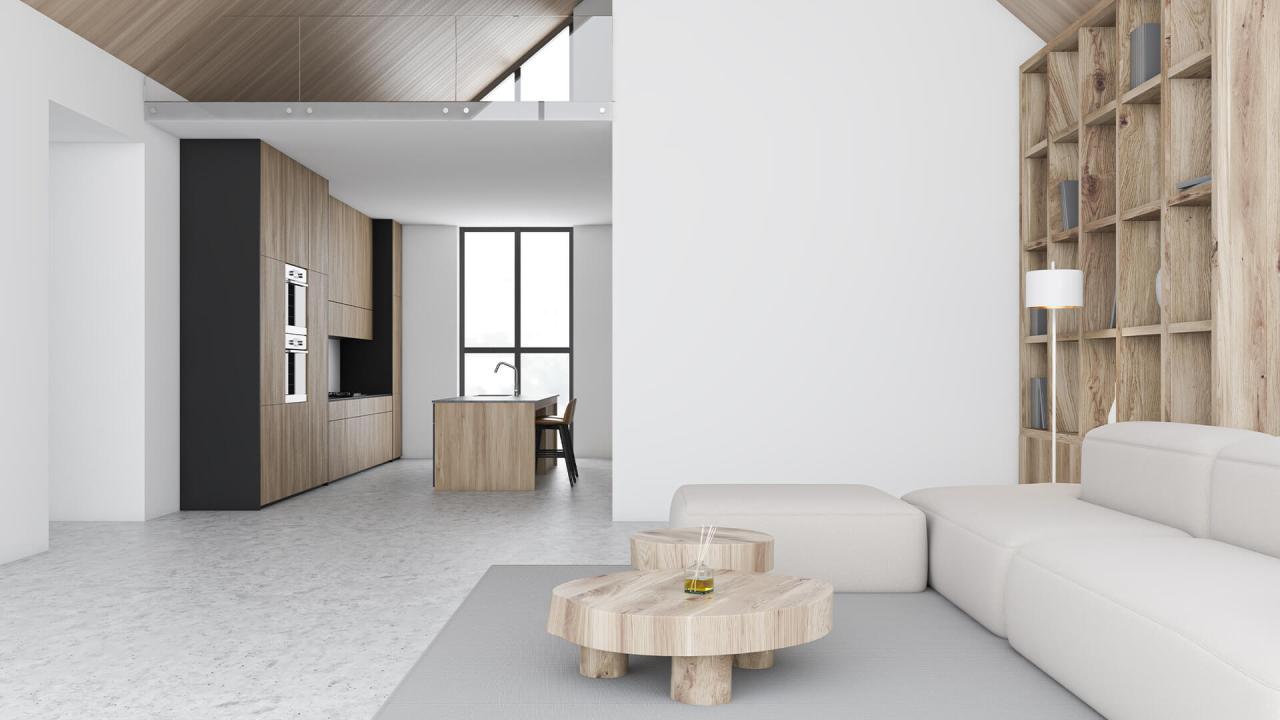
Minimalist structures heavily rely on simple, geometric forms—squares, rectangles, cubes—and clean, straight lines. This geometric purity creates a sense of order, precision, and visual calm. Walls meet floors and ceilings with flush, seamless transitions, and hardware is often concealed to maintain an uninterrupted visual flow.
D. Material Honesty and Natural Textures
Materials are chosen for their intrinsic qualities and are often left in their raw, unadorned state. This principle of material honesty means respecting the innate characteristics and textures of surfaces. Common materials include:
- Exposed Concrete: For its raw texture and industrial aesthetic.
- Steel: Used for structural integrity and sleek, thin profiles.
- Glass: To maximize natural light and blur the line between interior and exterior.
- Natural Wood and Stone: To introduce warmth and organic texture against the often-cool, industrial surfaces.
E. Maximizing Natural Light and Open Space
Light is treated as an architectural material itself. Minimalist buildings are designed with expansive windows, skylights, and open floor plans to draw in maximum natural light. This light plays dynamically with the simple surfaces, highlighting textures, creating shadows, and subtly delineating space without the need for physical barriers. The use of open-plan layouts further amplifies the sense of space and flow.
F. Limited and Neutral Color Palette
The typical minimalist color scheme is restricted to a neutral and monochromatic palette. Whites, blacks, grays, and natural wood/stone tones form the foundation. This restraint is intentional, as it reduces visual distraction, reinforces the feeling of calm, and allows the textures of the materials and the play of light to become the primary visual interest. Accents of color are used sparingly and deliberately to create focal points.
The Profound Benefits of Minimalist Architecture
The architectural choices inherent in the minimalist style translate into significant tangible and psychological advantages for the building’s occupants and owners.
A. Psychological Well-being and Clarity
An uncluttered physical environment often leads to an uncluttered mind. Minimalist spaces, with their serene aesthetics and absence of visual noise, are proven to reduce stress, promote relaxation, and enhance mental focus and clarity. The deliberate connection to nature through large windows fosters a sense of tranquility and a break from the visual information overload of the outside world.
B. Increased Functionality and Efficiency
By prioritizing function over form, minimalist design ensures that every square foot of a building is purposeful. Open floor plans and integrated storage maximize the usable area, making the space highly flexible and efficient for diverse activities, which is particularly beneficial in smaller urban dwellings.
C. Economic and Sustainable Advantages
Minimalist construction inherently requires fewer materials and less complex detailing, which can lead to:
- Lower Construction Costs: Simpler forms and reduced material variety can streamline the building process.
- Reduced Maintenance: Fewer components, simpler surfaces, and durable, honest materials require less upkeep over time.
- Sustainability: The focus on high-quality, durable materials and energy-efficient elements like maximized natural light often results in a lower environmental footprint and lower long-term utility costs. Minimalist design is a natural ally of sustainable architecture.
D. Timeless Aesthetic Appeal
Minimalism eschews fleeting trends in favor of timeless simplicity. Its clean lines, neutral colors, and pure forms ensure that a minimalist building remains relevant, sophisticated, and elegant for decades, preserving its aesthetic and market value.
Iconic Minimalist Architects and Masterpieces
A deeper appreciation for the movement requires an examination of the architects who defined it and the structures that exemplify its principles.
A. Ludwig Mies van der Rohe (Germany/USA)
- Barcelona Pavilion (1929), Barcelona, Spain: A masterpiece of form and material, featuring a flowing, open plan and rich materials like travertine, onyx, and chrome, demonstrating that “less” does not mean “cheap.”
- Farnsworth House (1951), Illinois, USA: A nearly transparent glass and steel pavilion suspended above the landscape, perfectly embodying the ultimate connection between dwelling and nature.
B. Tadao Ando (Japan)
- Church of the Light (1989), Ibaraki, Japan: A stunning example of spatial and material austerity. The only decoration is a dramatic cross cut into the bare concrete wall, allowing light to pour through and define the spiritual experience.
- Modern Art Museum of Fort Worth (2002), Texas, USA: Combines signature smooth concrete with massive glass curtain walls and reflection pools, creating a tranquil environment for art contemplation.
C. John Pawson (UK)
A contemporary master known for his serene, almost ascetic interiors. His work focuses intensely on the manipulation of light and the sensual qualities of carefully chosen materials.
- Neuendorf House (1991), Mallorca, Spain: An early, influential project that uses simple, monolithic geometry and local pink-orange walls to create a secluded, peaceful sanctuary.
D. Alberto Campo Baeza (Spain)
Known for harnessing the power of light, structure, and gravity.
- Casa Turégano (1995), Madrid, Spain: A minimalist house that uses white space and large openings to manipulate natural light and create a profound sense of lightness and openness.
How to Achieve the Minimalist Look in Your Space
Adopting a minimalist architectural style—even in a renovation—requires intentionality and a commitment to the “less is more” philosophy.
A. Focus on Architectural Shell Integrity
Ensure the structure itself is clean and well-defined. This means:
- Smoothing walls and ceilings.
- Removing or simplifying elaborate moldings and trim.
- Concealing infrastructure (wires, pipes, vents) behind flush surfaces.
- Using recessed or track lighting instead of decorative fixtures.
B. Decluttering as a Prerequisite
The key to the minimalist aesthetic is the absence of clutter. This is non-negotiable.
- Curate Possessions: Only keep items that are essential, functional, or deeply meaningful.
- Maximize Storage: Incorporate integrated, hidden storage (built-in cabinets, flush closets) to keep items out of sight and maintain clean surfaces.
C. Strategic Use of Furniture
Furniture in a minimalist space is highly functional, often low-profile, and minimal in number.
- Select Simple Forms: Choose pieces with clean lines and simple geometric shapes.
- Prioritize Quality: Invest in a few high-quality, durable pieces rather than many disposable ones.
- Embrace Negative Space: Allow large areas of the floor and walls to remain empty, as this negative space is crucial for visual balance and calm.
D. Harmonizing Light and Shadow
Maximize the use of natural light wherever possible.
- Uncover Windows: Avoid heavy drapes; use simple blinds or sheer curtains if privacy is required.
- Reflective Surfaces: Employ subtle reflective materials like polished concrete or glass to distribute light deep into the interior.
Conclusion: The Enduring Power of Simplicity
Minimalist architecture, born from a desire for purity and functional integrity, continues to resonate in a world increasingly characterized by excess and distraction. It is not about deprivation; it is about clarity, intention, and quality over quantity. By stripping a building down to its essential, beautiful core—celebrating light, honest materials, and precise geometry—minimalism creates sanctuaries that enhance well-being, promote efficiency, and offer a timeless aesthetic.
Embracing this style is a conscious decision to prioritize meaningful space and deliberate design, proving that in architecture, the greatest impact is often achieved not through what is added, but through the courage to subtract. The result is a profound, quiet power that transforms a simple structure into a work of enduring art.